
The 10-Minute Desk Athlete Mobility Routine That Undoes 8 Hours of Sitting

You crushed a 6 AM workout. You ate clean. You drank your water. And then you sat at a desk for 9 hours and undid all of it. Sound familiar?
Chronic sitting is the silent destroyer of athletic performance. It shortens your hip flexors, deactivates your glutes, rounds your thoracic spine, and creates compensatory patterns that show up as neck pain, low back pain, and restricted mobility. Even if you train hard, sitting 8+ hours a day is actively working against your body.
What Happens When You Sit All Day
Your hip flexors — specifically the psoas and iliacus — spend the entire day in a shortened position. Over time, they adapt to that length, pulling your pelvis into anterior tilt and compressing your lumbar spine. Meanwhile, your glutes essentially "turn off" from disuse. This creates what therapists call lower cross syndrome: tight hip flexors and low back, weak glutes and core.
Up top, your chest muscles shorten, your shoulders round forward, and your upper traps and levator scapulae go into overdrive trying to hold your head up over a forward-drifting spine. This is why so many desk workers come to me with "stress headaches" that are actually postural tension patterns.
The 10-Minute Reset
I give this exact routine to my executive clients. Do it once mid-day and once before bed. It takes 10 minutes and requires zero equipment.
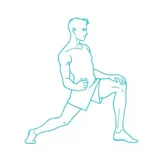
1. Standing Hip Flexor Stretch (90 seconds per side)
Step into a deep lunge with your back knee on the ground. Tuck your pelvis under (think: belt buckle toward your chin) and lean forward slightly. You should feel a deep stretch in the front of your hip — not your quad. Hold for 90 seconds. Breathe into the tightness.
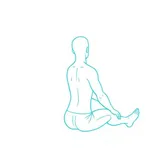
2. 90/90 Hip Switch (2 minutes)
Sit on the floor with both legs bent at 90 degrees — one in front, one to the side. Slowly rotate to switch sides, keeping your chest tall. This mobilizes both internal and external hip rotation, which is the first thing you lose from chronic sitting. Do 8–10 slow switches.
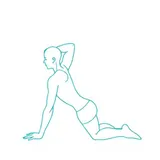
3. Thoracic Spine Rotation (90 seconds per side)
Get on all fours. Place one hand behind your head. Rotate that elbow toward the opposite knee, then open up toward the ceiling. Follow your elbow with your eyes. This reverses the rounded upper back position and restores rotation — which is critical for runners, golfers, and anyone who trains with overhead movements.
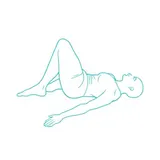
4. Glute Bridge Hold (2 minutes)
Lie on your back, feet flat. Squeeze your glutes and lift your hips. Hold at the top for 10 seconds, lower for 2 seconds. Repeat for 2 minutes. This reactivates the glutes that have been dormant all day and reinforces proper pelvic alignment.
5. Wall Angel (2 minutes)
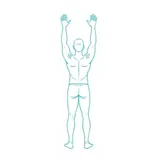
Stand with your back against a wall. Press your low back, shoulders, and head into the wall. Slowly slide your arms up and down like a snow angel, maintaining contact. This is harder than it sounds — and that difficulty tells you exactly how much your posture has shifted.
Pro tip: If any of these movements reveal sharp pain, restriction, or you can't complete the range of motion — that's your body telling you something is stuck. A targeted manual therapy session can clear that restriction so the mobility work actually holds.
Why This Matters for Performance
Your training is only as good as the body you bring to it. If you show up to the gym with locked-up hips, dormant glutes, and a compressed spine — you're training compensatory patterns, not building real strength. This 10-minute routine is the bridge between your desk life and your training life.
Desk pain turning into training pain?
Kendahl works with executives and desk athletes to clear restrictions and build a body that performs — not just survives.
Book a Session